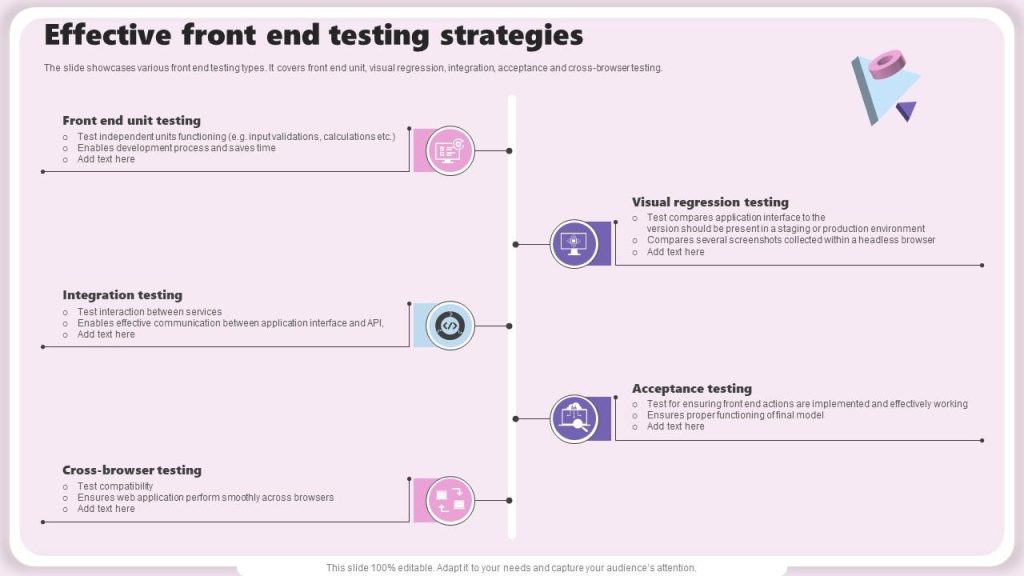
Testing strategies for robust front-end applications are paramount in today’s dynamic digital landscape. A poorly tested front-end can lead to frustrating user experiences, broken functionalities, and ultimately, a tarnished brand reputation. This comprehensive guide delves into the crucial aspects of front-end testing, providing a framework for building robust and maintainable applications. We’ll explore different testing approaches and highlight best practices to maximize the quality of your front-end applications. This article will cover unit testing, integration testing, and end-to-end testing, along with real-world examples and practical strategies to implement in your workflow. We will also touch on the role of automated testing tools and strategies to make the process more efficient and sustainable.
Understanding the Importance of Front-End Testing
Defining Robust Front-End Applications
Front-end applications are the face of any web or mobile application. They encompass all the user interface elements that users interact with directly. A robust front-end is one that is reliable, performs well under load, and delivers a seamless user experience. This directly impacts user satisfaction and retention.
The Challenges of Untested Front-End Applications
Untested front-end applications are prone to bugs and inconsistencies. Imagine a user experiencing a critical error during a critical transaction or encountering a broken button during a critical step in a checkout process. This could translate to significant financial losses, customer dissatisfaction, and damage to your reputation. The potential for negative impact is enormous, making reliable front-end testing critical for the success of any project. Robust front-end testing identifies and mitigates these issues.
Building a Comprehensive Testing Strategy
With many applications having complex front-ends, a structured and comprehensive testing strategy is essential. This strategy not only ensures the application functions correctly but also improves the development process. This is particularly important when working with larger teams and projects.
Related Post : Improving Website Performance: Optimizing Front-End Code for Speed.
This guide outlines the best practices in testing strategies to mitigate risks and enhance the quality of applications. The framework we will cover includes testing approaches for unit, integration, and end-to-end testing. We will use real-world scenarios and examples to illustrate each approach. These examples are based on real world experiences and common issues.
Unit Testing Techniques
Isolating Components for Effective Testing
Unit testing involves testing individual components or modules of a front-end application in isolation. This approach ensures that each component functions as expected without interference from other components. It’s essential to ensure each part of the front-end is working as intended so that larger integrations can be developed with confidence.
Example: Testing a Button Component
Let’s consider a button component. A unit test would verify that the button renders correctly, updates the state correctly, and handles various user interactions such as clicks or hover actions correctly. This can be done using frameworks like Jest or Mocha, ensuring that the button behaves as expected within its context.
Integration Testing Strategies
Connecting Components to Verify Interactions
Integration testing verifies how different components interact with each other. This testing strategy focuses on the connections between components. This ensures a smooth workflow within an application, which includes passing data and triggering actions properly.
Example: Testing a User Authentication Flow
Testing an authentication flow involves verifying that components such as the login form, API interactions, and user data management cooperate seamlessly to handle user login requests correctly and securely. This ensures the entire authentication flow operates predictably, reducing potential security risks, and improving overall application stability.
Using Mocking for Isolated Testing
Mocking is a crucial integration testing technique that enables you to test components in isolation. This is especially important when testing the interaction between front-end components and external APIs or back-end services.
End-to-End Testing Methods
Simulating User Flows for Realistic Scenarios
End-to-end testing simulates a complete user journey, checking how different parts of the application interact to deliver a seamless user experience. This is critical to ensure the system works correctly from the user’s perspective.
Importance of End-to-End Tests
End-to-end tests ensure that the entire application operates as expected when users execute typical tasks within the application. This includes verifying data input and output, and verifying that everything is as expected from end to end.
Example: Testing an Online Store Checkout
A detailed end-to-end test for an online store checkout would include steps such as adding products to a cart, navigating to the checkout page, filling out billing and shipping information, and processing payments, ensuring all these actions work together flawlessly.
Automation and Continuous Integration for Front-End Testing
Why Continuous Integration (CI) Matters
Continuous integration (CI) combined with automated testing tools allows developers to catch bugs early on. Frequent testing through CI improves the predictability of releases.
Leveraging Testing Frameworks and Tools
Using automated testing frameworks and tools like Cypress, Selenium, or Playwright can significantly increase testing efficiency and reduce manual effort. Tools like these can easily test different parts of your front-end application.
Example: Setting up CI for Front-End Projects
Setting up CI pipelines for your front-end projects will allow you to automatically run tests after each commit or pull request, helping you discover and fix issues quickly and prevent critical bugs from going unnoticed.
null
null
null
null
In conclusion, robust front-end testing strategies are critical for building high-quality, reliable, and maintainable applications. By implementing a combination of unit, integration, and end-to-end testing, developers can proactively identify and fix bugs early in the development cycle, leading to a significantly smoother user experience. To ensure your front-end applications are future-proof, I encourage you to incorporate these strategies into your development process. Let’s discuss the specific needs of your project to refine the testing strategy further. Schedule a free consultation today to discuss your front-end application testing strategy!


