Are you struggling with content updates on your corporate website? Keeping your website fresh and engaging is essential for attracting visitors and demonstrating your company’s activity in the digital sphere. Website content updates involve more than just superficial changes; they’re a vital element of effective digital marketing. This comprehensive guide provides actionable strategies to simplify your content update management, making the process significantly smoother and more effective. We will examine common pain points, offer proven solutions, and equip you with tools to manage and implement content updates effectively. In this article, we will dissect the strategies to manage and streamline these processes, leading to a highly productive and well-maintained corporate website. We’ll tackle common challenges, explore best practices, and suggest technological solutions. We’ll also discuss ways to track and measure your content’s impact.
Understanding the Importance of Regular Content Updates
The Ever-Evolving Digital Landscape
Keeping your corporate website updated is paramount for maintaining a dynamic and engaging online presence. Regular content updates are critical in today’s ever-changing digital landscape. A stale website can negatively impact user experience and potentially hurt your search engine rankings. Fresh content showcases your company’s activity and relevance, driving organic traffic to your website. This crucial activity keeps your audience engaged and interested. In the digital realm, website content is equivalent to a company’s voice and presence. Frequent updates keep it vibrant. This directly translates into improved search engine rankings and organic traffic, which are fundamental for any business. Recent studies suggest a correlation between frequent website updates and higher search engine visibility.
Maintaining Relevance and User Engagement
Your website’s content needs to reflect the latest information about your services or products. A regularly updated website reinforces your company’s commitment to providing current and relevant information. Regular content updates directly impact how search engines rank your website. Search engines prioritize sites with fresh content, boosting visibility and organic traffic. Websites that don’t adapt to shifts in industry trends can gradually lose their presence in search results. Updating regularly demonstrates your expertise and commitment to the needs of your target audience.
Identifying Common Pain Points in Website Content Updates
Related Post : Corporate Website Not Generating Leads? Identifying Design Issues Affecting Conversions.
Time Constraints and Resource Allocation
One of the most common struggles is the time constraint involved in content updates. Updating content requires dedicated time and effort for research, writing, editing, and scheduling. A significant amount of time could be lost in coordination among teams. In a corporate environment, this can be a significant challenge if resource allocation isn’t well-defined. Often, teams are juggling multiple tasks, making dedicated time for content updates tricky. Delays can easily happen when roles and responsibilities aren’t clearly defined.
Streamlining the Content Update Process
Establishing a Clear Workflow
A well-defined workflow for updating content is fundamental to simplifying the process. This involves assigning tasks to specific team members or departments and setting deadlines for each phase. A clear outline of responsibilities and a structured process greatly reduce ambiguity. Consider dividing the content update process into smaller, manageable tasks. This modular approach reduces overwhelm and improves the overall efficiency of the task.
Leveraging Technology for Enhanced Efficiency
Exploring Content Management Systems (CMS)
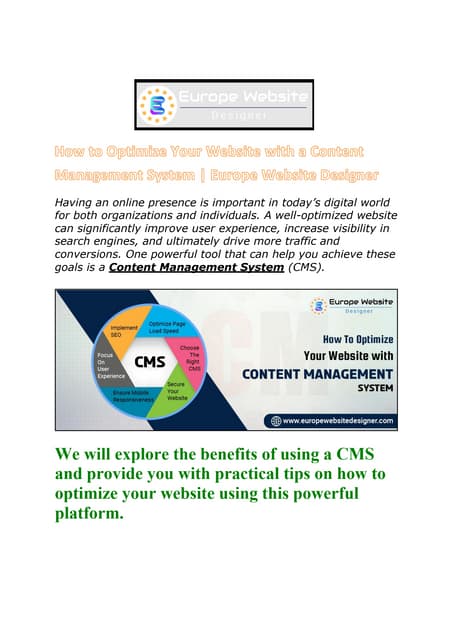
Employing a content management system (CMS) is one of the most effective ways to streamline the process. CMS platforms offer user-friendly interfaces and tools for updating content directly. Using a CMS can significantly reduce the time required for content updates, thus lowering the overall workload.
Implementing Effective Content Planning Strategies
Creating a Content Calendar
A content calendar is a tool that helps structure the timing and type of content that is posted to a site. A calendar ensures that you update the website in a consistent and strategic manner. Using a content calendar ensures that your website is updated on a regular and predictable schedule, resulting in more predictable traffic. A consistent publishing schedule is an excellent strategy for building an engaging website. Planning the content ahead can anticipate changes to the content accordingly.
In conclusion, streamlining content updates on your corporate website is crucial for maintaining a dynamic and engaging presence. By implementing a well-structured workflow and leveraging the right tools, companies can simplify this often-complex process. A dedicated content management system (CMS) can be a game-changer. Remember to prioritize clear communication and training amongst your team for seamless collaboration. Ready to simplify your website content updates? Contact us today for a free consultation.